
NEWS
Fire Safety on Construction Sites: What UK Law Requires in 2026
Fire safety is one of those topics that site managers feel confident about until something goes wrong, and then it becomes apparent that confidence and compliance are not always the same thing. The Regulatory Reform (Fire Safety) Order 2005 places clear legal duties on every employer operating a construction site in the UK, and enforcement has tightened considerably in recent years.
This guide explains what the law actually requires, what equipment a compliant site needs, and the practical steps to take before your next mobilisation.
What the law says
The Regulatory Reform (Fire Safety) Order 2005 (RRO) is the primary legislation governing fire safety in non-domestic premises across England and Wales, including construction sites. The equivalent in Scotland is the Fire (Scotland) Act 2005.
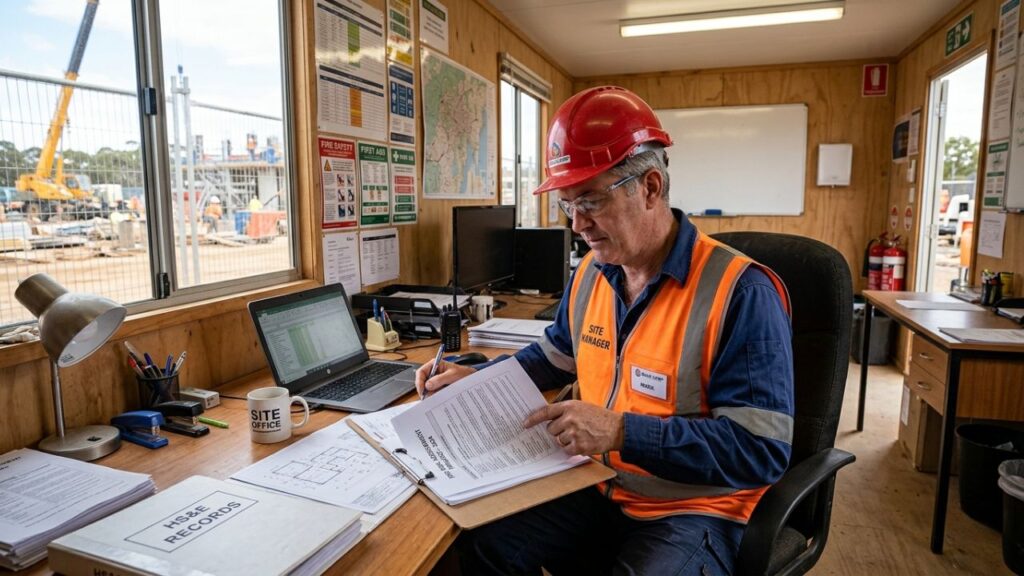
Under the RRO, the responsible person, typically the principal contractor or site manager, is legally required to:
- Carry out and regularly review a fire risk assessment
- Implement appropriate fire prevention and protection measures
- Ensure adequate means of escape are in place and kept unobstructed
- Provide suitable fire detection and warning systems
- Ensure staff are trained in fire procedures
- Maintain records of assessments, equipment checks, and training
Non-compliance is a criminal offence. Enforcement notices, prohibition orders, and prosecution are all available to the fire and rescue authorities.
Why do construction sites carry a higher fire risk
Construction sites present a fire risk profile that is meaningfully different from that of a completed building. The key factors include:
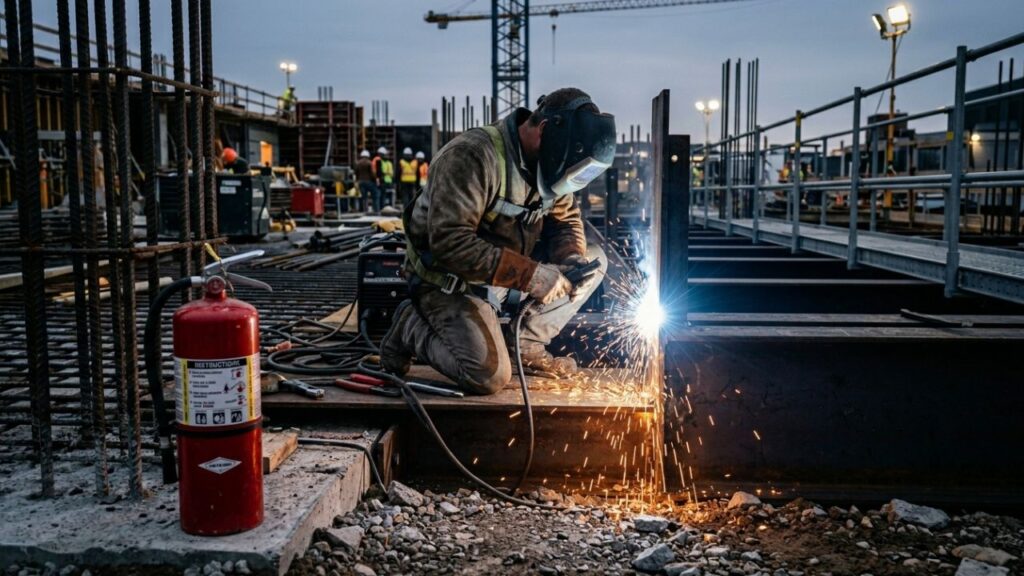
- Hot works: welding, grinding, cutting, and torch operations generate significant ignition risk
- Temporary electrical installations: site distribution boards and extension cables are a leading cause of electrical fires
- Flammable materials: timber, insulation, adhesives, solvents, and waste are often stored in close proximity
- Changing layouts: escape routes that are clear on Monday may be obstructed by materials on Friday
- Welfare cabins: often poorly ventilated and used for drying clothes, charging tools, and storing personal kit, all fire risk factors
- Reduced staffing overnight: a fire that starts out of hours can develop unchecked without adequate detection systems
What equipment does a compliant site need?
Fire risk assessment
This is the starting point; everything else flows from it. Your assessment must be site-specific, regularly reviewed (at minimum at each new phase of the build), and documented in writing. Generic risk assessments that are not tailored to your specific site, layout, and activities will not satisfy an enforcement inspection.
Fire detection and alarm systems
The appropriate system depends on your site size and the build phase, but as a minimum, most sites require:
- Smoke detectors in all welfare cabins, drying rooms, and enclosed storage areas
- Heat detectors in kitchens and areas where steam or dust would cause smoke detector false alarms
- Manual call points at all designated escape routes and at the site entrance
- An audible alarm that can be heard across the entire site
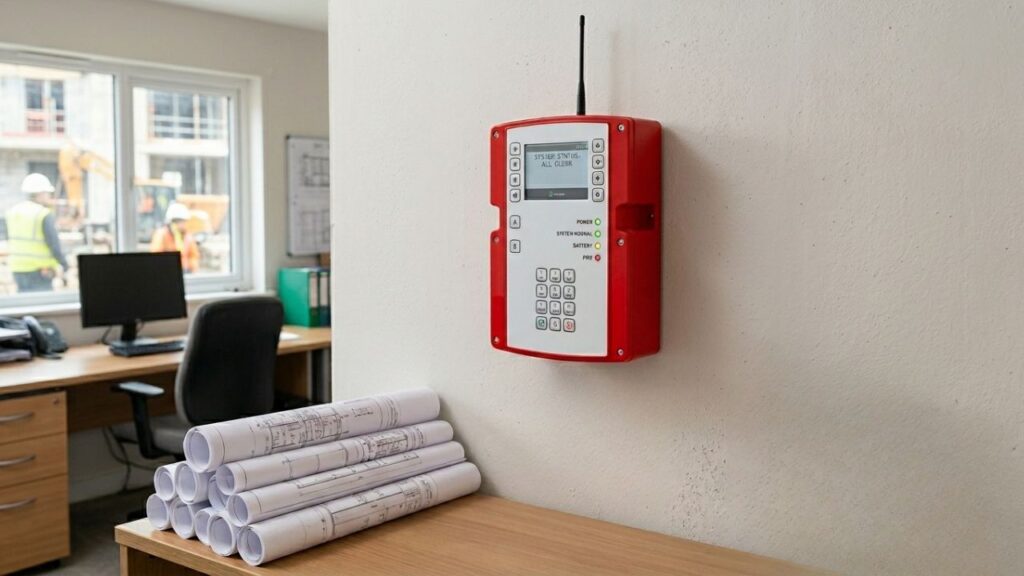
On larger sites, a networked fire alarm control panel that links detection devices and provides a single point of monitoring and override is standard practice and increasingly expected by main contractors.
Extinguishers and fire points
Every fire point on site should have the correct extinguisher for the hazard present:
- CO2 extinguishers at all electrical distribution boards and tool charging points
- Water or foam extinguishers for general combustible material risk
- Dry powder where flammable liquids (fuels, solvents) are stored
Extinguishers must be inspected monthly, serviced annually, and replaced when discharged or out of date. A log of each inspection is required.
Escape routes and assembly points
All escape routes must be:
- Clearly signed with compliant fire exit signage
- Kept unobstructed at all times
- Wide enough for the number of people on site
- Reviewed every time the site layout changes
The assembly point must be clearly signed, away from the building and vehicle routes, and known to every person on site, including contractors, visitors, and delivery drivers.
The hot works permit system
Any activity that generates heat, spark, or flame, such as welding, disc cutting, brazing, or bitumen work, requires a hot works permit. This is a written authorisation that confirms the work area has been inspected, combustibles removed or protected, a fire watcher is in place, and a post-work check will be conducted at least one hour after completion.
Hot works are responsible for a disproportionate share of construction site fires. A functioning permit system, properly enforced, is one of the single most effective fire prevention measures available.
A pre-mobilisation fire safety checklist
- Site-specific fire risk assessment completed and documented
- A responsible person is formally appointed and recorded
- Detection and alarm system specified, installed, and tested
- Extinguishers positioned at all fire points, type-matched to the hazard
- Escape routes defined, signed, and unobstructed
- Assembly point confirmed and communicated to all on site
- Hot works permit system in place and briefed to all relevant trades
- Fire safety induction completed for all personnel before starting work
- Monthly inspection log started
- Fire safety documentation included in your project file
How StarFM Group can help
Our fire safety systems are specified and installed for UK construction sites, control panels, fire alarms, call points, smoke and heat detectors, all designed to meet the requirements of the RRO and the expectations of main contractors and insurers. We install alongside our CCTV and lighting systems, giving you a single provider for your entire site security and safety setup.
to discuss fire safety provision for your next project.