
NEWS
Construction Site Lighting: Why It's Your First Line of Security
Ask most site managers what their biggest overnight security risk is and they’ll say CCTV coverage, or the lack of a monitoring contract. Rarely do they say lighting, and that’s a gap that criminals actively exploit.
Poor or absent site lighting is one of the most consistent factors in successful construction site break-ins. It creates blind spots that defeat even good camera systems, gives intruders the cover they need to work undetected, and signals to anyone watching that a site is unmonitored after dark.
In 2026, intelligent mobile lighting has moved from a nice-to-have to a baseline expectation for main contractors, insurers, and the HSE alike. This article explains why, and what a proper lighting plan looks like.
Why darkness is a criminal’s best tool
Organised theft gangs targeting UK construction sites operate at night for two reasons: reduced human presence, and reduced visibility. Remove the second advantage and you fundamentally change the risk calculation.
A well-lit site:
- Removes the cover of darkness that allows intruders to work undetected for extended periods
- Activates your CCTV system properly, cameras without adequate light produce footage that is effectively unusable for insurance or prosecution
- Creates a visible deterrent from the road, a lit site looks active and monitored even at 3am
- Improves worker safety during early starts, late finishes, and winter months when natural light is limited
The relationship between lighting and CCTV is particularly important. Even the best AI-powered camera system will struggle to produce clear, identifiable footage in genuine darkness. Light and surveillance work as a system, not as independent layers.
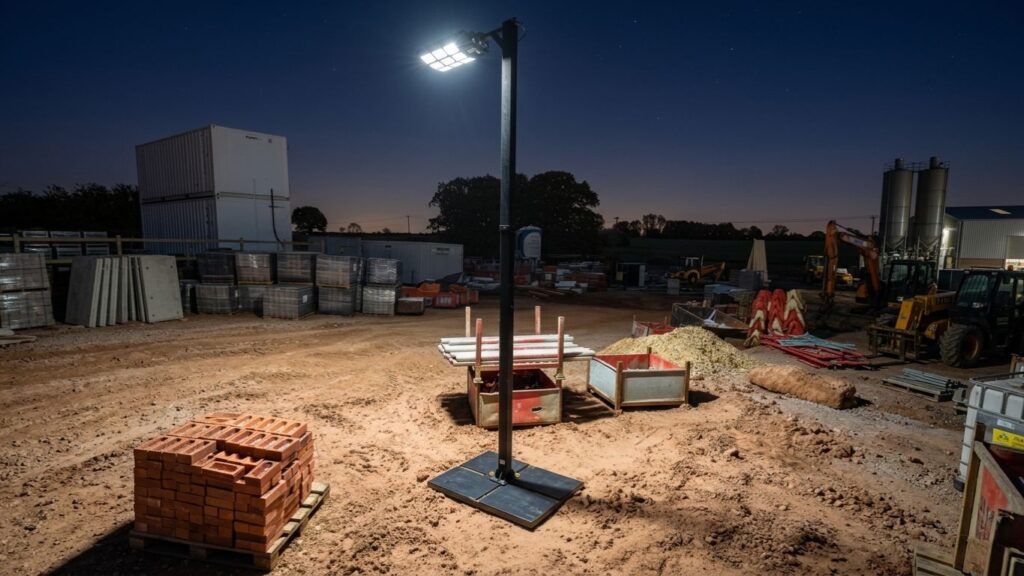
What intelligent, eco-friendly lighting looks like in 2026
The days of diesel-guzzling lighting towers running all night on a noisy generator are largely over on well-managed UK sites. Modern mobile lighting solutions, like those deployed by StarFM Group, combine several advances:
Solar and battery hybrid power
Self-contained units charge during the day and run through the night without mains power or a generator. This dramatically reduces fuel costs, eliminates generator noise, and removes the carbon footprint associated with traditional lighting.
Motion-activated smart control
Rather than flooding a site with light all night, which wastes energy and can cause light pollution issues with neighbours, smart systems activate to full power when motion is detected, returning to a lower ambient level during quiet periods. This also has a secondary deterrent effect: a sudden increase in light level when an intruder enters a zone is deeply unsettling.
Anti-tip and all-terrain deployment
Modern units are built with stability in mind, heavy base plates and anti-tip geometry that keeps units secure on muddy, uneven ground without the need for extensive groundworks. This matters on live construction sites where ground conditions change constantly.
Rapid deployment
The best units mirror the rapid-deployment model of CCTV, they can be positioned and operational within a couple of hours, redeployed as the site footprint changes, and demobilised quickly at project end.
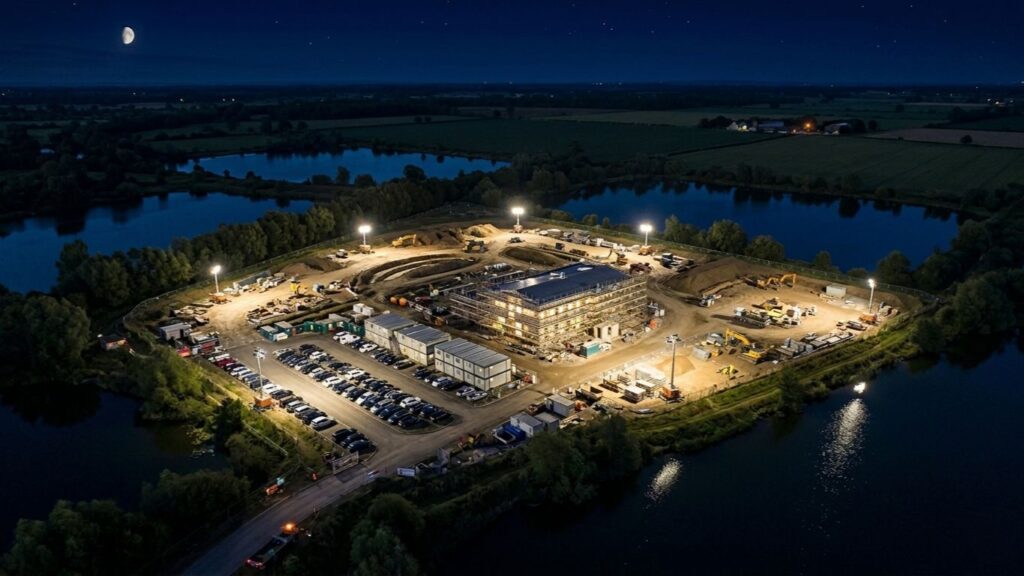
Planning a lighting scheme for your site
A proper lighting plan isn’t just pointing units at the site and hoping for the best. The key zones to cover are:
- Site entrance and gatehouse — the highest-traffic point, most likely location for opportunist entry
- Plant and machinery compound — your highest-value asset concentration
- Materials store — particularly relevant for copper, cable, and structural steel
- Perimeter blind spots — the corners and recesses that hoarding creates
- Welfare and office units — often overlooked, regularly targeted for tool and equipment theft
A good rule of thumb: if a camera can’t see it clearly at night, a lighting unit needs to be positioned there first.
What the HSE and insurers expect
The HSE requires that construction sites take reasonable steps to prevent unauthorised access, and adequate lighting is now considered part of that reasonable step-taking. For projects in public-facing locations, lighting also forms part of the duty of care to members of the public who might otherwise be endangered by an unlit, unsecured site.
From an insurance perspective, underwriters increasingly want to see a lighting plan alongside CCTV and perimeter documentation before writing favourable terms on large construction projects.
A practical lighting plan for your next project
Before mobilisation, run through these six steps:
- Mark up your site plan — identify every area that will be in darkness after sunset, including access points, the plant compound, materials stores, and any corners created by hoarding or temporary structures
- Position lighting before CCTV — your cameras need adequate light to function; get the lighting right first, then confirm camera positions around it
- Cover the compound first — plant and machinery represent your highest-value overnight exposure; this is where lighting delivers the fastest return
- Plan for seasonal change — a lighting scheme that works in June will leave gaps in December; build a review into your programme at the end of summer
- Integrate with your monitoring contract — your ARC needs to know where your lighting is, what it covers, and what triggers it
- Document it for your insurer — a written lighting plan, submitted alongside your CCTV spec, strengthens your insurance position considerably
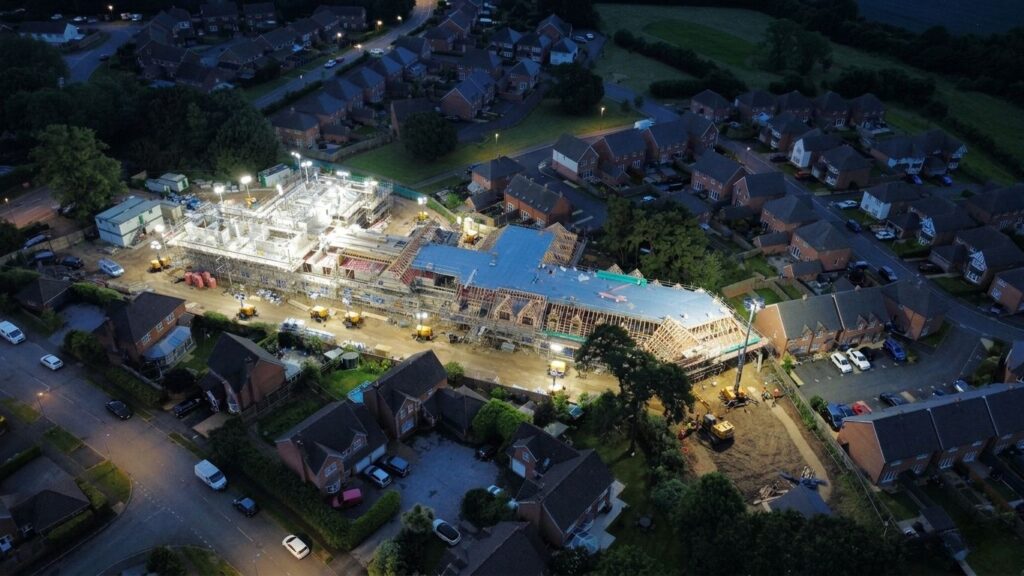
How StarFM Group can help
Our mobile lighting solutions are designed to work hand-in-hand with our rapid deployment CCTV systems, deployed fast, repositioned as your site evolves, and specified to cover the areas that matter most. We cover sites across the UK and can have lighting and CCTV operational the same day on most projects.
about a combined lighting and CCTV package for your next site.