
NEWS
CCTV Evidence and Police Response: What UK Forces Actually Need
There is a widely held assumption among construction site managers that having CCTV means having police support when something goes wrong. In practice, the relationship between your camera system and a police response is more conditional than that, and understanding the conditions is important if you’re specifying security for a live site.
UK police forces have moved to a verified response model in most regions. What that means in practice, and what it requires of your CCTV system, is something every site manager and principal contractor should understand before signing a monitoring contract.
What a verified response actually means
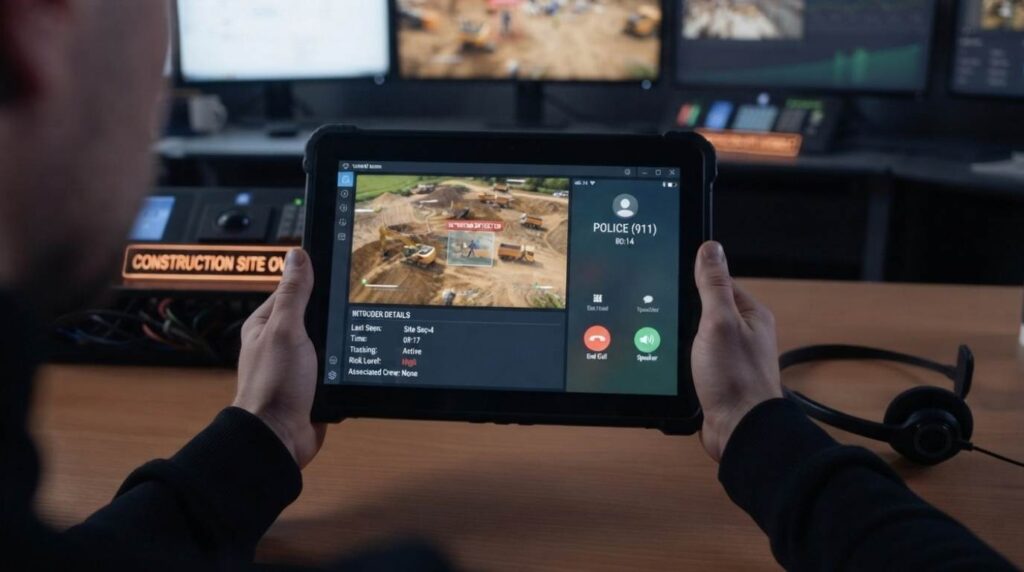
The verified response policy, adopted across most UK police forces, means that police will prioritise call-outs where an operator can confirm, with live or near-live footage, that an active intrusion is taking place. Unverified alarm activations, where a monitoring system has triggered, but no human has reviewed the footage and confirmed a genuine threat, receive a lower priority response, and in some areas may receive no response at all.
The practical implication is straightforward: a recording-only CCTV system, or a system that sends automated alerts without human review, does not generate a verified response. An intruder on your site at 2am, detected by an automated motion sensor that fires an alert to a keyholder’s phone, will not automatically bring the police.
A 24/7 staffed ARC monitoring contract, where a human operator reviews the alert in real time, confirms a human presence on site, and calls police with that confirmation and supporting footage, generates a verified response, and verified responses are prioritised.
What makes footage actually usable
Beyond the verified response question, the quality of your CCTV footage determines what happens after the police arrive, whether a prosecution can follow, whether your insurance claim is supported, and whether the footage is usable at all.
The factors that determine footage quality are:
Resolution: Footage needs to be high enough resolution to identify individuals, read number plates, and show the detail of what was taken. 4MP is the practical minimum for identification-quality footage; anything lower is of limited evidential value.
Lighting: A camera without adequate light produces footage that is effectively unusable, regardless of resolution. The combination of good cameras and adequate site lighting is what produces footage that a prosecutor can work with.
Timestamping: Every frame needs a reliable, accurate timestamp. This is not just a technical nicety; it is a chain-of-custody requirement for footage to be admissible as evidence.
Storage and backup: Footage that is stored locally on a device that can be stolen is not secure evidence. Cloud-backed storage with a documented chain of custody is what insurers and prosecutors need.
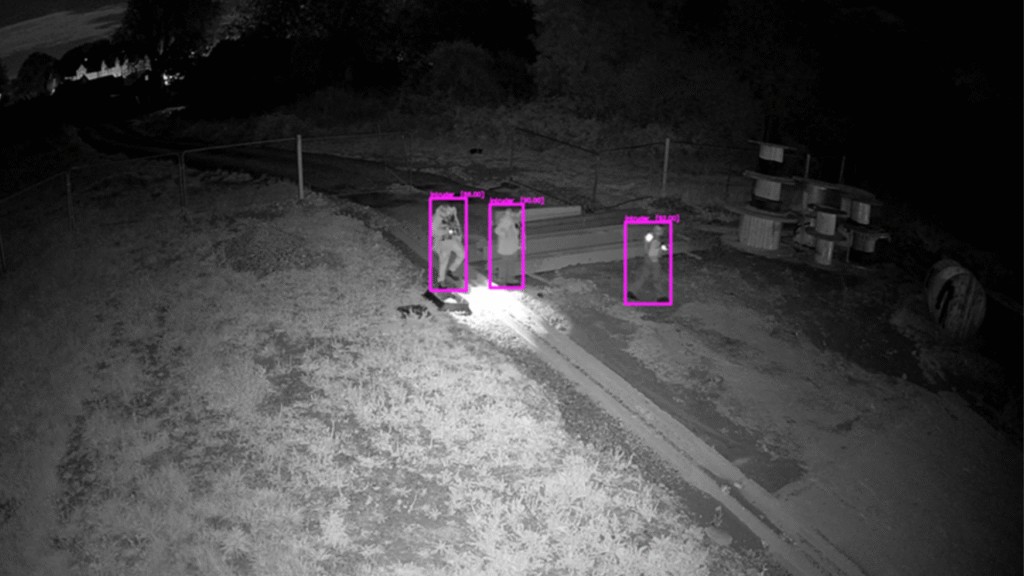
Night vision capability: IR illumination range and thermal imaging capability determine how the system performs in the hours when most construction site theft takes place.
The audio challenge advantage
One element of modern ARC-monitored systems that is often underappreciated in evidential terms is the live audio challenge. When an operator broadcasts a challenge through the tower’s speaker, confirming the individual has been seen and that police have been called, the response of the person on site is captured on camera.
That response is itself evidence. It establishes awareness, demonstrates intent, and in many cases produces footage of the individual’s face that a lower-stakes approach, where they never know they’ve been detected, would not.
What to confirm with your monitoring provider
Before signing a monitoring contract, confirm the following in writing:
- Is my system monitored by a staffed ARC, 24/7, 365 days?
- What is the average time from alert to operator review?
- Does the operator have the capability to provide a verified response to the police?
- What is the footage resolution and storage specification?
- Is footage stored in cloud backup with chain-of-custody documentation?
- Does the system have live audio challenge capability?
- What does the incident report look like? Will it support an insurance claim?
How StarFM Group delivers verified response capability
Every StarFM Group system is connected to a 24/7 staffed ARC with verified response capability. Our AI-powered detection filters false alarms before they reach the operator, which keeps response credibility high, and when a genuine alert is confirmed, our monitoring team calls the police with verified footage, not an automated alarm trigger.
to discuss the monitoring specification for your next site.