
NEWS
Construction Site Welfare Security: Protecting Cabins, Plant and Tools
The plant compound gets most of the attention when site security is discussed. The access gate gets covered. The materials store gets a lock and a camera. And then the welfare cabins, the drying rooms, the tool stores, the canteen units, the site office, get a padlock on the door and not much else.
That is a gap. Welfare cabins and the equipment they contain are among the most consistently targeted areas on UK construction sites, and they are consistently underprotected relative to the risk they carry.
What’s actually at risk in your welfare facilities
The value stored in a typical construction site welfare setup is higher than most site managers instinctively assume.
Tool stores: a well-stocked site tool store can contain tens of thousands of pounds of power tools, hand tools, measuring equipment, and specialist kit. These items are immediately resaleable, easy to carry, and difficult to identify once they’ve left site.
Personal tools, tradespeople’s personal tool kits, often stored in the drying room or on the van overnight, represent a significant personal financial loss when stolen, and an immediate programme impact when the affected operative can’t work the following morning.
Site office equipment, laptops, tablets, surveying equipment, and radios are all high-value, portable, and targeted. A site office break-in can also compromise sensitive project data, drawings, and commercial information.
Canteen and welfare equipment, microwaves, fridges, televisions, and other welfare appliances are lower value individually but are taken routinely on sites where there is no deterrent.
Welfare units themselves: on some sites, the welfare units are hired rather than owned. Damage to them during a break-in, forced doors, smashed windows, creates a liability that sits with the contractor.
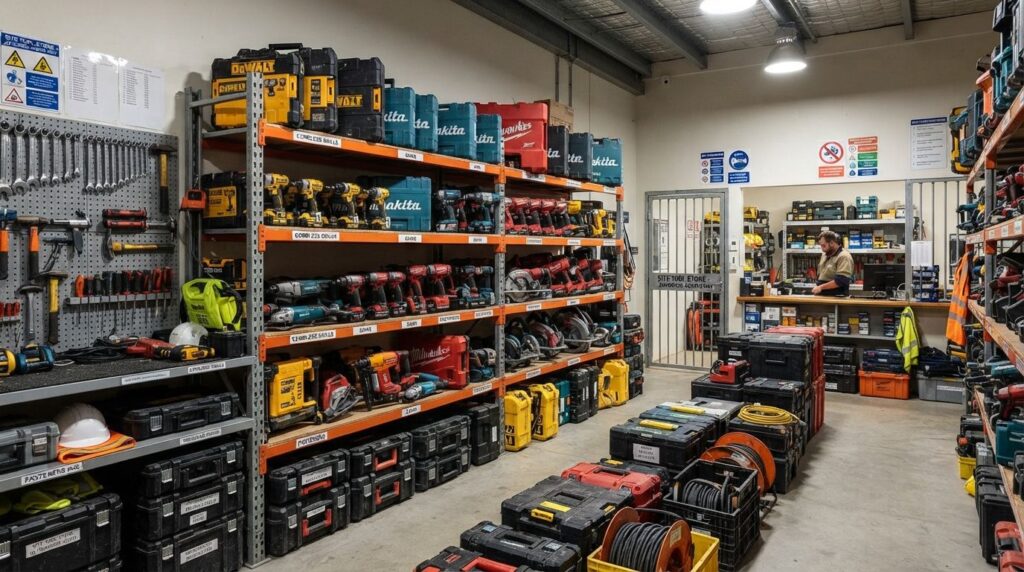
Why welfare cabins are targeted
The pattern is straightforward. Welfare cabins are soft targets compared to a compound with a steel gate and a monitored CCTV tower pointing at it. They’re typically positioned at the edge of a site, their doors are often secured with standard padlocks, and they’re assumed to be low-priority because they’re not where the plant is.
Criminal groups that are familiar with construction sites know this. A cabin break-in takes minutes, produces portable, immediately valuable items, and is far less likely to trigger a monitored alert than a plant compound breach, unless cameras are specifically positioned to cover the welfare area.
How to properly secure welfare facilities
Physical security of the cabin
- Solid core doors on all cabins; the standard welfare cabin door is a weak point; upgrading to a reinforced door or adding an external security bar significantly increases resistance to forced entry
- High-security padlocks on closed-shackle hasps, not standard padlocks that can be cut in seconds
- Window grilles or security film on ground-level windows; glass is the easiest way into a cabin
- Anti-vandal coating on exterior surfaces where relevant; this is a deterrent measure as much as a practical one
CCTV coverage of the welfare area
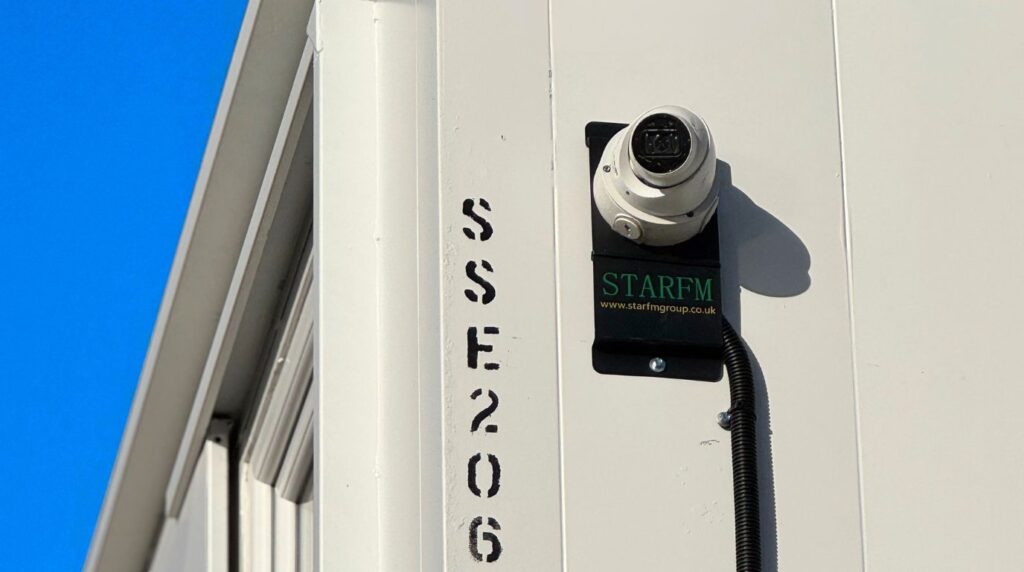
This is the most significant gap on most sites; cameras cover the plant compound and the main gate but don’t extend to the welfare area. A CCTV unit positioned to cover the welfare cabin cluster, tool store access, and site office changes the risk profile of that area entirely.
The same AI-powered detection and 24/7 ARC monitoring that protects your compound will protect your cabins; the system just needs to be positioned to see them.
Lighting
Welfare cabins are often at the end of a cable run, with the last lighting unit positioned some distance away. Make sure the welfare area is adequately lit overnight; a dark corner next to a welfare cabin is exactly the environment a break-in requires.
Tool management and storage
Beyond physical security of the cabin itself, how tools are stored and managed inside makes a difference:
- Tool register, a documented record of what is on site, who it belongs to, and its serial number or asset mark, makes recovery more likely and insurance claims cleaner
- Asset marking, power tools marked with a forensic marker or UV pen are significantly harder to sell and easier to recover
- Overnight lockboxes for the highest-value items, an additional layer inside the cabin for tools that are particularly valuable or hard to replace
The insurance position
Tool theft from construction sites is one of the most commonly claimed-on events in construction site insurance. Claims are also frequently challenged, on the grounds that the security of the storage area was inadequate, that no tool register was maintained, or that the value claimed cannot be substantiated.
Maintaining a tool register, photographing high-value items, documenting the security specification of your welfare area, and having monitored CCTV covering the cabin cluster all contribute to a claim that is difficult to challenge.
How StarFM Group can help
When we plan CCTV and lighting coverage for a construction site, welfare facilities are part of the coverage plan, not an afterthought. If your current security setup doesn’t extend to your welfare area, for a site review.