
NEWS
Construction Site Theft in the UK: 2026 Trends and How to Stop It Before It Hits Your Programme
Construction site theft has stopped being an inconvenience and become a programme risk. In 2026, UK contractors are reporting more frequent break-ins, more organised criminal activity, and bigger losses per incident than at any point in the last decade. For a main contractor running a tight NEC4 programme, a single weekend raid can mean weeks of delay, a six-figure insurance claim, and an uncomfortable conversation with the client.
If you’re a site manager, project director, or working in procurement for a UK construction firm, this guide breaks down what’s actually being stolen in 2026, why it’s getting worse, and the layered security approach that’s now considered best practice by major insurers.
The real cost of theft on a UK construction site
The headline figures get the attention – Aviva and Allianz consistently put the annual cost of UK construction theft at well over £800 million. But the direct value of stolen kit is rarely the biggest hit. The damage usually breaks down like this:
- Replacement cost of plant, tools, fuel, or materials
- Programme delay while replacements are sourced (lead times on plant can run 4–12 weeks)
- Increased insurance premiums and excess at next renewal
- Liability exposure if stolen materials cause downstream H&S issues
- Damage caused during the break-in, fencing, hoarding, cable theft scars
- Reputational impact with the client and end-user
A theft that looks like £30,000 of stolen plant on paper routinely becomes a £120,000+ problem once delays and insurance impact are factored in.
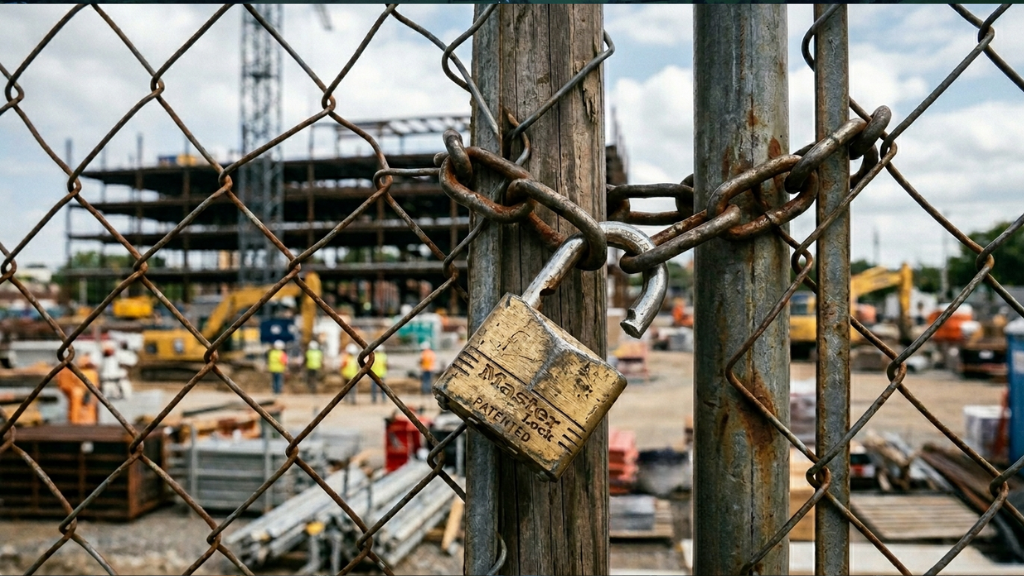
What’s being stolen in 2026. The four main targets.
1. Mobile plant and machinery
Excavators, telehandlers, dumpers and skid-steers remain the most lucrative single targets. Organised crime groups are now stealing to order, often shipping stolen plant out of UK ports within 48 hours. Newer machines with telematics are not immune; thieves have become adept at disabling trackers before the unit leaves the site.
2. Hand tools and power tools
Tradesperson tool theft from site lock-ups and parked vans has spiralled. Tools are easy to move, hard to identify, and have an instant resale market through online marketplaces. For trades on site, the personal financial impact can be devastating, and the knock-on effect to your programme, when a chippy can’t work on Monday morning, is immediate.
3. Fuel
With diesel prices remaining elevated through 2026, red diesel theft from plant tanks and on-site bowsers has become a near-weekly issue on many UK sites. A single overnight siphoning operation can drain thousands of litres.
4. Copper, cable and structural metal
The price of copper has driven a sharp rise in cable theft, stripped from temporary site supplies, tower cranes, and even partially installed M&E. Lead, brass fittings, and rebar are also being targeted, particularly on sites near major road networks where quick removal is possible.
Why is theft getting worse? The 2026 picture.
Three things have changed the threat landscape:
- Organised crime has industrialised. What used to be opportunistic locals is now coordinated gangs with reconnaissance, fast vehicles, angle grinders, and disposal routes already in place before they arrive.
- Sites are more visible than ever. Public planning portals, drone footage on social media, and even contractors’ own LinkedIn posts give criminals everything they need to identify high-value targets.
- The deterrent gap has widened. Police response times to commercial property alarms have lengthened in many UK regions, which means a site that relies on a basic alarm and a hope-for-the-best approach is effectively unprotected overnight.
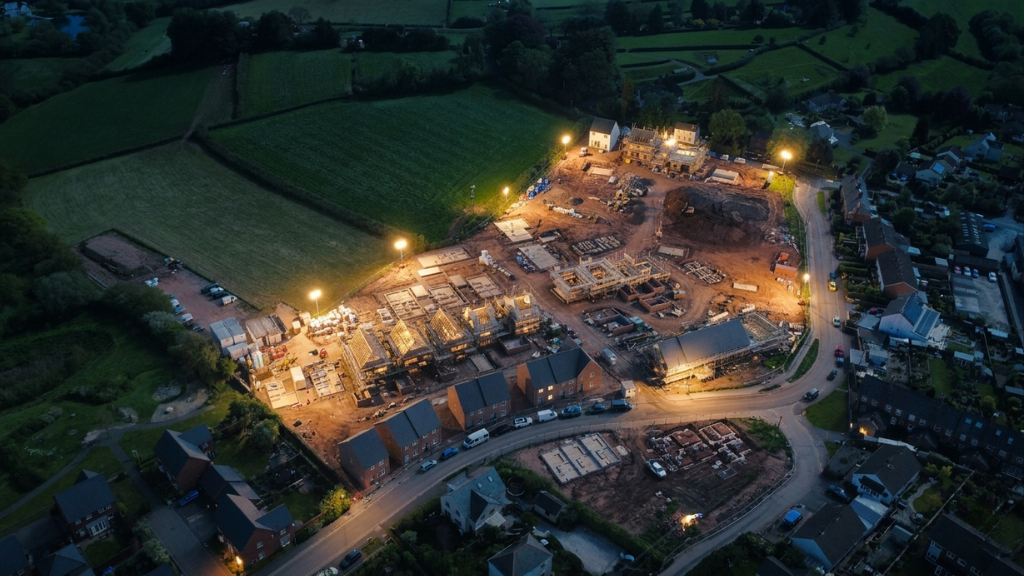
The layered security approach that actually works
There is no single product that stops construction site theft on its own. What works, and what insurers increasingly expect to see before they’ll write favourable terms, is a layered approach built around four pillars.
Pillar 1: Deterrence
The goal here is to make a criminal choose a different site. Strong perimeter hoarding, clear signage, bright site lighting, and a visible CCTV presence all work as deterrents. Rapid-deployment CCTV towers with on-board sirens are particularly effective because they’re obvious from the road and clearly active.
Pillar 2: Detection
Detection is about knowing the moment someone enters the site. Modern systems combine AI-driven analytics, thermal imaging, and motion detection to distinguish between a fox, a fluttering tarpaulin, and a human intruder, which dramatically cuts false alarms and keeps the response credible.
Pillar 3: Response
Detection without response is just expensive recording. A properly specified system routes alerts to a 24/7 monitoring centre where operators can issue live audio warnings, dispatch keyholders, and escalate to police with verified evidence, which Police Scotland and most English forces now prioritise over unverified alarms.
Pillar 4: Evidence
If the worst happens, the system has to produce footage that’s actually usable for insurance and prosecution. That means high-resolution capture, time-stamped recording, secure cloud backup, and chain-of-custody documentation.
What insurers and main contractors now expect
If you’re tendering for work with the larger UK contractors, or renewing site insurance for 2026, the bar has moved. You should now expect to be asked about:
- Whether your site has 24/7 monitored CCTV (not just recording)
- How quickly your system can be redeployed if the site footprint changes
- Whether you have out-of-hours lighting that doesn’t rely on grid power
- Your fire safety provision, which is increasingly bundled into security risk assessments
- Your incident reporting process and average alert-to-response time
Sites that can answer these questions clearly tend to get better insurance terms and stronger references from main contractors.
A practical checklist for your next site
Before your next mobilisation, run this checklist:
- Perimeter survey completed with blind spots identified
- CCTV coverage is planned for access points, plant compound, and material stores
- Lighting plan in place for the full overnight period
- Monitoring contract with clear SLAs on response time
- Fire safety equipment positioned and commissioned
- Site team briefed on incident reporting procedure
- Insurance broker was informed of security spec in writing
How StarFM Group can help
We work with main contractors across the UK, including United Living, Hill Group, Ground Control and Oakwood. Providing rapid-deployment CCTV, mobile lighting, and fire safety systems designed specifically for live construction sites. Our towers can be on site and operational within hours, monitored 24/7, and redeployed as your site footprint changes.
If theft is a risk on your next project, and in 2026, it almost certainly is, for a no-obligation site security review.