
NEWS
How to Secure a Construction Site Before Internal Fit-Out Begins
There is a specific point in many construction programmes where the security profile changes more quickly than the site team expects. That point is usually the beginning of fit-out.
Up to this stage, the site may have been treated primarily as an external environment. Security has focused on the perimeter, the entrance, the compound, the generator, and the large plant. That makes sense during enabling works, groundworks, frame, and shell construction. But once a project begins to move into internal fit-out, the nature of what is at risk starts to change.
More valuable materials arrive. Tools become more concentrated inside the building. Access routes become more complex. More subcontractors are moving through the site. Installed items start to have resale value in their own right. In many cases, the site looks more complete and therefore feels more secure – but from a theft and access-control perspective, it may actually be entering one of its more exposed phases.
Why fit-out security is different
Internal fit-out changes the site in three important ways.
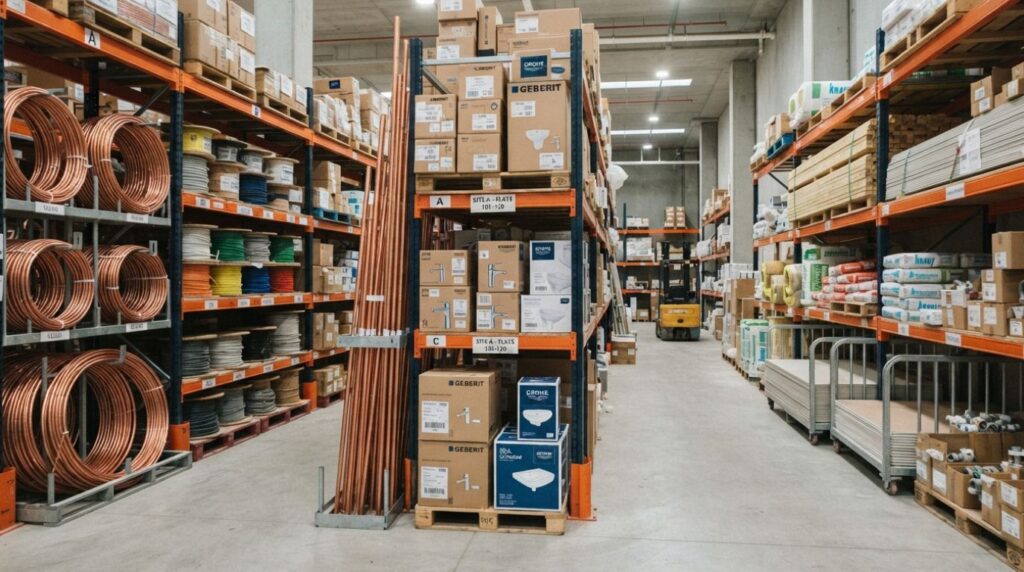
First, it increases the density of portable value. Copper, cable, sanitaryware, M&E components, fixings, finishings, and specialist tools all begin arriving in larger volumes. These are often easier to remove discreetly than heavy plant or structural materials.
Second, it changes how people move through the site. A building that was previously a shell now has multiple internal spaces, access routes, rooms, corridors, and partially enclosed areas. That makes oversight more difficult and makes it easier for someone to be present without standing out immediately.
Third, it creates a dangerous gap between appearance and reality. To an outsider – and sometimes even to the site team – a building with doors, windows, partitions, and internal works underway may feel more secure than it really is. But if access control, camera coverage, and storage routines have not evolved with the build, that sense of security is misleading.
What is most at risk during fit-out
Tools
Fit-out stages usually bring more tools on site, often belonging both to the principal contractor and to multiple specialist subcontractors. These may include expensive power tools, cutting equipment, testing equipment, and trade-specific kit that is easy to move and hard to trace once stolen.
Installed or partly installed materials
At fit-out stage, thieves may no longer need to steal from a pile of materials. They can steal from the building itself. Copper pipework, cable, valves, sanitaryware, and other installed items are all at risk, especially in areas that are complete enough to hold value but not complete enough to be locked down properly.
Welfare and site office equipment
As the programme becomes busier, the volume of information, tech, handheld devices, and site documentation often increases. Laptops, tablets, surveying devices, radios, and chargers may all be stored in offices or cabins that become secondary targets.
Higher-value finishes
Certain fit-out projects – especially commercial, high-end residential, or education/healthcare projects – begin to receive valuable internal finishes and specialist equipment before the building is fully secure. These materials can be attractive targets, particularly if deliveries arrive ahead of when they are needed.
Signs that your security plan has not caught up with fit-out
There are some common warning signs that a site’s security arrangements are still set up for an earlier phase:
- Cameras still focus mainly on perimeter and plant, with little internal relevance
- Tool and material storage locations are improvised rather than planned
- Internal access routes are busy but not clearly controlled
- Lighting is strong outside but poor in key transition areas or inside loading zones
- Installed materials are visible and accessible with limited monitoring around them
- Responsibility for internal storage security is unclear between trades
If any of these apply, the fit-out phase probably requires a security review rather than just business as usual.
What to change before internal works scale up
Reassess camera coverage
This should be the first move. Ask whether the current coverage still reflects the real risk profile of the site. If the answer is still based mainly on gate and compound logic, the fit-out risk may be under-covered.
Priority areas often include:
- main building entrances
- delivery points
- internal storage areas
- key circulation routes
- welfare and office zones
- recently completed sections containing installed materials
Tighten access control
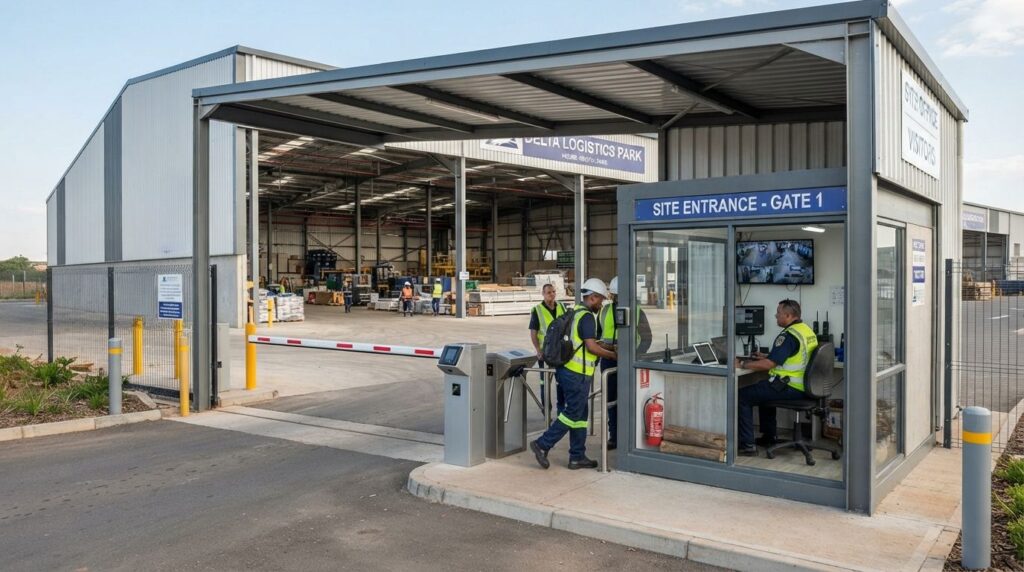
Fit-out is often when sites become busiest in terms of people movement. That makes access discipline more important, not less. Sign-in systems, inductions, and route control need to remain firm enough that unauthorised presence is noticed quickly.
Formalise storage
Materials and tools should not simply follow the workface without control. Dedicated secure storage areas should be agreed, documented, and managed. If everyone assumes someone else is watching the materials, no one really is.
Review lighting as an internal-external system
Lighting is easy to think of as an external requirement, but fit-out stages often need stronger attention to the transition between outside and inside – loading areas, ground-floor entrances, stair cores, temporary access points, and unfinished routes.
Fit-out theft is often quiet, not dramatic
One reason fit-out risk is underestimated is that it does not always look like traditional site theft. It may not involve a compound breach, vehicle incursion, or obvious overnight attack. It may be smaller, quieter, and repeated over time: tools disappearing, copper removed gradually, materials going missing from incomplete areas, or access being gained through routine building movement.
That is exactly why a more deliberate fit-out security plan matters. The risk is not always loud, but the cumulative loss can still be substantial.
Fit-out security is really about control
At this stage of the programme, good security is less about the simple question of whether the site is fenced and more about whether the site is controlled. Who can get in? Where can they go? What is visible? What is stored where? What is monitored? What is recorded? The more valuable and portable the site becomes, the more those questions matter.
How StarFM Group can help
Our monitored CCTV and lighting solutions can be repositioned and refined as your project moves into fit-out, ensuring coverage reflects the new risk areas rather than the old ones. about reviewing your site security before internal works begin.